


Navigating the culinary landscape of Thailand’s capital requires a reliable street food guide in Bangkok for first-time visitors who want to experience authentic flavors safely and efficiently. The aroma of sizzling garlic, toasted chilies, and simmering broths drifts through every alleyway, transforming street corners into open-air dining rooms. Millions of travelers arrive in the city each year, yet many remain hesitant to pull up a plastic stool at a curbside vendor due to unfamiliarity with local customs, ordering etiquette, and food safety standards. Understanding how this culinary ecosystem operates allows travelers to move past apprehension and appreciate the rich heritage embedded in every bowl of noodles or plate of rice.
The dynamic nature of Bangkok’s open-air dining culture stems from generations of family recipes passed down through decades. Public health organizations, such as the World Health Organization, frequently study urban food safety systems, noting that high turnover rates and intense heat naturally minimize the survival of pathogens in freshly cooked dishes. Culinary historians referenced by institutions like the Smithsonian Magazine explain that urban migration throughout the twentieth century shaped these neighborhoods, bringing regional specialties from the northern mountains and southern coastal provinces into a single metropolitan hub. Consequently, mastering a street food guide in Bangkok for first-time visitors means recognizing that these mobile kitchens are regulated not by bureaucratic inspection sheets, but by the discerning palates of local residents who demand consistency and freshness daily.
Essential Etiquette and Ordering Protocols
Approaching a busy curbside stall for the first time involves a set of practical habits that ensure a smooth transaction. Vendors typically position menus near the seating area, though many popular spots display only Thai text alongside faded photographs. Pointing to a photograph or utilizing translated terms on a mobile device bridges any communication gap effectively. Cultural norms emphasize patience and politeness, with a respectful nod and a smile serving as universal currency. Research highlighted by sociologists through platforms like BBC Culture suggests that observing local dining behavior—such as where to leave payment or how to signal for the bill—prevents common tourist friction points and fosters positive cultural exchange.
Seating arrangements in bustling culinary zones rarely follow formal reservation procedures. Diners frequently share tables with strangers, particularly during peak lunch and dinner hours. Leaving space for others and vacating the stool promptly once the meal concludes demonstrates proper consideration for the establishment and fellow patrons. Utensils are usually housed in communal metal cylinders on the table, often sanitized in boiling water before the meal begins. Linguistic nuances also play a role; learning basic phrases for spice level adjustments transforms an overwhelmingly fiery dish into an enjoyable culinary experience without causing offense to the cook.
Navigating Legendary Culinary Neighborhoods
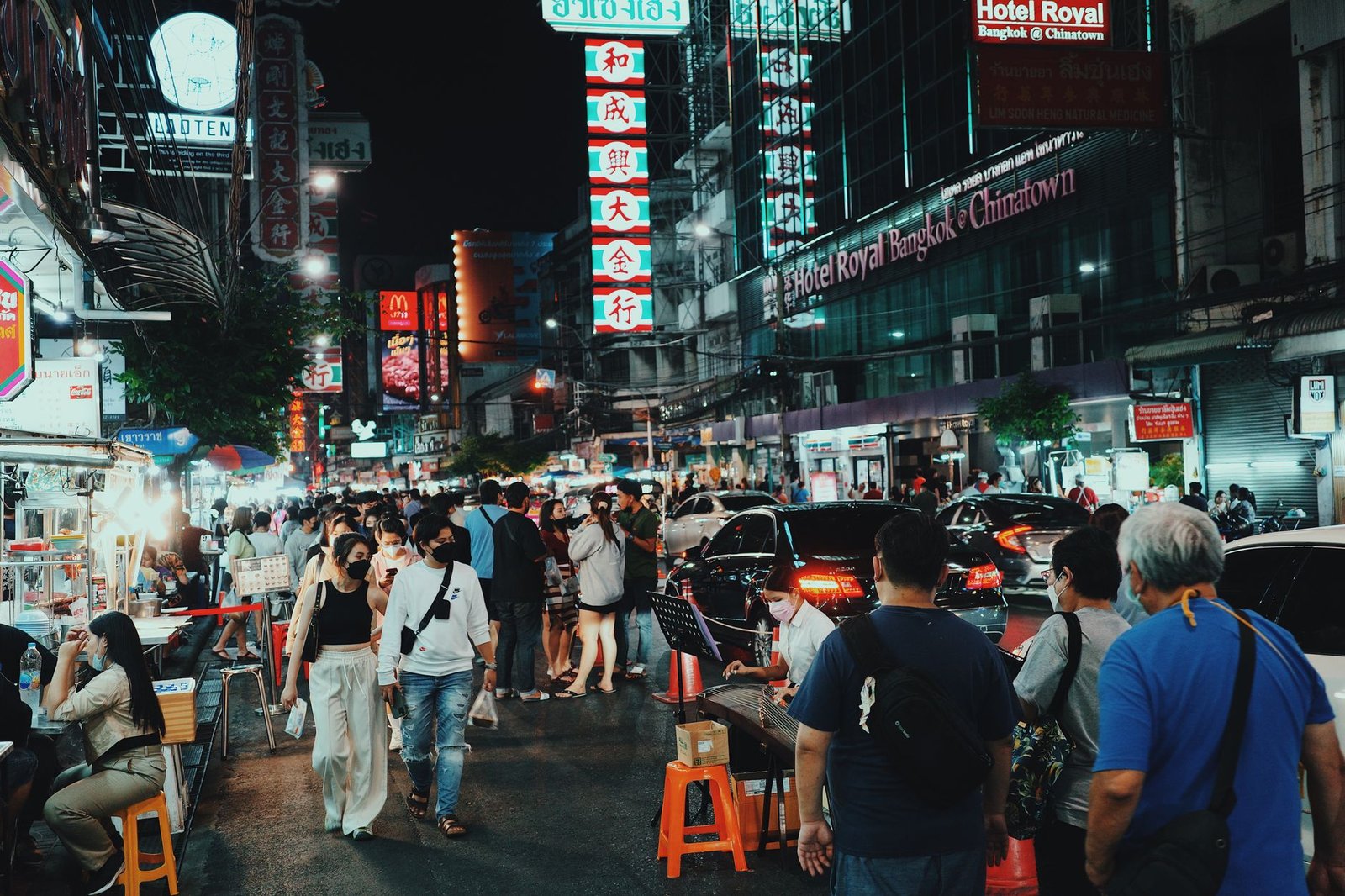
Different districts within the metropolis offer distinct flavor profiles and atmospheric experiences. Yaowarat Road, the historic Chinatown district, transforms after sunset into a neon-lit corridor of charcoal grills, wok-tossed noodles, and sweet coconut desserts. Urban planning analyses published by entities like The Guardian often highlight how these historic neighborhoods preserve traditional architecture while accommodating modern culinary entrepreneurship. Navigating this district requires stamina, as narrow walkways fill quickly with hungry locals and international travelers alike, all seeking charcoal-roasted pork and handmade fish balls.
Moving away from the river toward the Old Town reveals quieter avenues where vendors have operated from the same storefronts for over fifty years. Districts such as Bang Lamphu and Phra Nakhon maintain a slower pace, featuring legendary purveyors of clear beef broths and crispy rice crackers. Architectural preservation efforts documented by academic groups associated with Chulalongkorn University demonstrate how these older quarters maintain their culinary identity amidst rapid modernization. Exploring these historic zones provides context regarding how urbanization influenced the availability of specific regional ingredients over the past century.
Top Must-Try Dishes for Beginners
Sampling the right foundational dishes ensures a rewarding introduction to local flavors without overwhelming sensitive palates. Pad Thai remains the universally recognized starting point, featuring thin rice noodles stir-fried with tamarind paste, fish sauce, dried shrimp, bean sprouts, and crushed peanuts. Nutritional studies published in culinary journals indexed by Taylor & Francis Online analyze the careful balance of sweet, sour, and salty compounds that define this iconic stir-fry. While widely available, the best versions feature a smoky aroma imparted by a seasoned wok heated over high flame.
Another essential selection is Som Tam, a shredded green papaya salad pounded in a clay mortar with garlic, bird’s eye chilies, dried shrimp, roasted peanuts, lime juice, and palm sugar. The dish offers a sharp contrast of textures and temperatures, pairing exceptionally well with grilled chicken known as Gai Yang and sticky rice. For a comforting meal, Jok—a savory rice porridge served with minced pork, ginger, and a soft-boiled egg—provides a soothing breakfast option. Agricultural economics research shared by the Food and Agriculture Organization underscores how rice remains the foundational staple supporting these diverse culinary preparations across Southeast Asia.
Safety, Hygiene, and Practical Health Tips
Maintaining health while exploring open-air dining involves observing straightforward visual indicators rather than avoiding street food altogether. High customer turnover serves as the most reliable indicator of safety, as ingredients are replenished constantly rather than left sitting at ambient temperatures. Dietary health guidelines published by the Centers for Disease Control and Prevention recommend selecting piping-hot items that are cooked to order in front of the customer. Ice added to beverages in established venues is typically manufactured in commercial plants using purified water, making it generally safe for consumption, though bottled water remains the safest baseline choice for hydration.
Carrying small denomination banknotes simplifies transactions, as many roadside vendors operate on small profit margins and cannot easily break large bills. Wet wipes or hand sanitizer provide practical convenience before eating, especially when dining at communal tables where hand-washing stations may be located a short distance away. Recognizing personal spice tolerance prevents digestive discomfort; requesting mild preparation—expressed locally as “phet nitหน่อย”—allows diners to gradually acclimate their systems to authentic regional spice levels over several days.
Culinary Comparison of Popular Bangkok Street Food Zones
| District Name | Atmosphere and Vibe | Signature Dish to Try | Best Time to Visit |
|---|---|---|---|
| Yaowarat (Chinatown) | Neon-lit, bustling, dense crowds | Charcoal-roasted pork belly | After 6:00 PM |
| Old Town (Phra Nakhon) | Historic, traditional storefronts | Crispy pork with kale (Kua Kling) | Mid-day to Late Afternoon |
| Ari | Trendy, neighborhood-focused, modern | Northern curry noodles (Khao Soi) | Lunch hours |
| Silom | Corporate hub, fast-paced, lunch rush | Basil chicken over rice (Pad Kra Pao) | Weekday lunch |
Frequently Asked Questions
How do I pay vendors at street food stalls?
Most roadside vendors accept cash in small denominations. While digital QR code payments have become widespread among younger urban vendors, carrying cash remains the most dependable method for transactions across all neighborhoods.
Is it safe for vegetarians to eat street food in the city?
Vegetarian options exist, though communicating specific dietary restrictions requires careful attention. Key ingredients like fish sauce and shrimp paste are common in many broths and sauces, so clarifying plant-based preferences using translated cards helps avoid animal-derived components.
What time do street food vendors typically operate?
Operating hours vary by district. Morning markets focus on breakfast soups and porridge, while evening markets specialize in grilled meats, stir-fries, and complex desserts, with peak activity occurring between 6:00 PM and midnight.
How can I avoid getting sick from street food?
Select stalls with long queues of local residents, ensure meals are cooked thoroughly in plain sight, and drink bottled or filtered water to minimize any risk of foodborne illness.
Are English menus common at street food stalls?
English menus are increasingly available in high-traffic tourist zones, but many traditional neighborhood vendors rely solely on Thai signage or photographic displays, making visual identification of dishes a useful skill.
Concluding an exploration of this vibrant urban foodscape reveals a culinary network built on precision, heritage, and community interaction. Embracing the diversity of open-air dining transforms a standard holiday into an immersive cultural journey. By applying practical health awareness, respecting local dining etiquette, and venturing beyond conventional tourist hubs, visitors gain a genuine appreciation for the traditions sustaining this metropolis. Careful planning and an open mind ensure that every meal contributes meaningfully to an unforgettable travel experience.
Featured Image Credit: Generated/Sourced via Unsplash.
Disclaimer: This article is AI-generated for informational and educational purposes. While we strive to provide high-quality context and authority, the content should not be used as professional advice. The author/website assumes no liability for external links or factual omissions.